Municipal Community Center
West Side StoryThe Municipal Community Center is a former West Side church turned into a public gathering place for neighborhood clubs and youth activities. Its effort to welcome residents across ethnic lines leaves it caught between the divisions it was meant to overcome; at a June dance, however, the nearly empty facility briefly becomes a shared social space and the setting for Tony Wyzek’s first meeting with Maria Nunez.
From church to civic space
Years after two congregations of the same faith joined, the older of their West Side churches—already in greater need of repairs—was put up for sale. It stood empty for nearly a year, its windows an easy target, until the congregation offered the building to the city on the condition that officials find a use for it. The city accepted, and the church became the Municipal Community Center.
The center launched clubs for boys, girls, and adults, opening its creaking doors to the neighborhood. Its primary aim was to draw young people away from the streets by offering supervised recreation and instruction. The program was considered thoughtful and well-intentioned, but it never became an unqualified success: it did not fail spectacularly, yet it did not flourish enough to make its social workers proud.
An open door that divides its users
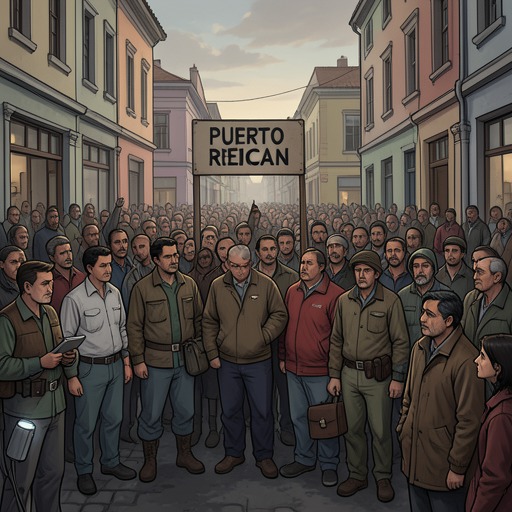
The center was open to all neighborhood residents, including Puerto Ricans. That inclusiveness became the source of its practical failure. Long-established residents began avoiding the building once they understood that Puerto Ricans were welcome, and their children were difficult to persuade to attend. Puerto Rican families, in turn, kept away because they did not want to use a center boycotted by the established residents.
Most days, the result was a public facility with little public life: rooms stood empty, clubs went unattended, books and games remained on their shelves, and the basketball court had no players. Social workers gathered in an office over coffee, lamenting the difficulty and thanklessness of their work. The center’s failure was not simply a lack of activities; its universal invitation could not overcome the neighborhood’s mutual suspicion.
That impasse belongs to a wider West Side marked by overcrowding, deteriorating buildings, and few affordable alternatives for ordinary tenants. The streets were crowded with problems, while residents had little influence over decisions affecting their neighborhood. In that setting, a civic building could offer a different kind of common ground, but its doors alone could not make that ground socially neutral.
The June dance
On a June evening, the center’s prospects briefly changed. Murray Benowitz had advertised the dance without expecting much, drawing on experience that had taught him not to count on young people attending. Since eight o’clock, however, teenagers had been arriving in numbers large enough that he called in two additional workers. He stood beside the record player beneath bright crepe-paper decorations, with records ready, chilled punch, ice, cups, and napkins prepared for the crowd.
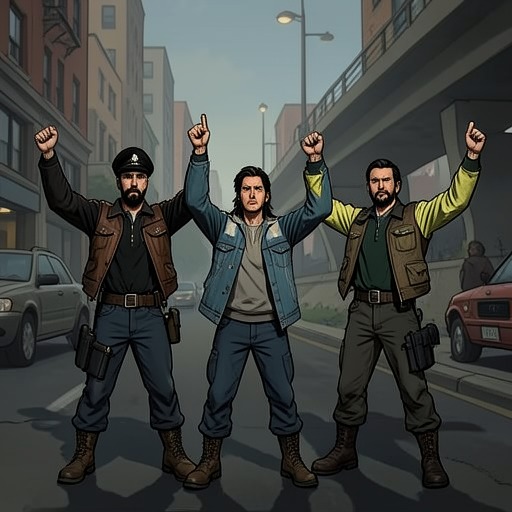
Both the Sharks and the Jets came. They took opposite sides of the dance floor and moved as if competing, each group keeping to its own half as though an invisible wall divided the room. Murray feared that their presence together might turn violent, but no fight broke out. The arrangement was a fragile form of coexistence rather than a reconciliation: the center brought the gangs into one room without dissolving their separation.
A meeting within the divided room
Tony arrived without a partner and felt out of place among the couples. The Sharks, including Bernardo, and the Jets, including Riff Lorton, seemed to him like strangers; he considered leaving and regarded Riff’s challenge to Bernardo as Riff’s own affair. Then Tony noticed Maria standing against the wall in a white dress. She noticed him too, and his intention to leave disappeared. Their first encounter at the dance makes the center more than a backdrop: inside a room still marked by rival groups and their boundaries, the two young people turn their attention toward one another.
The evening thus gives the Municipal Community Center a sharply limited success. It can gather teenagers whom the ordinary program has struggled to reach, and it can host a meeting that matters to the wider story. But the Jets and Sharks remain on opposite sides of the floor. The building makes proximity possible; it cannot, by itself, undo the divisions that shape what happens there.